

Shell & Tube Heat Exchanger Analysis
Necessity of Shell & Tube Heat Exchanger Analysis
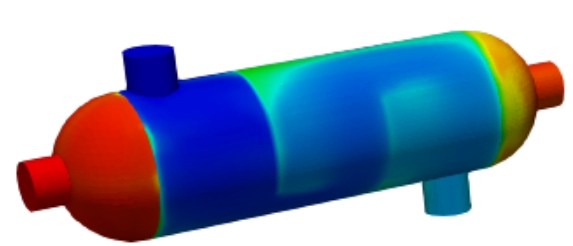
-
Achieving Optimal Heat Transfer Performance
Thermal analysis enables the development of efficient heat exchanger designs that meet the target heat transfer rates while minimizing energy losses. This ensures optimal thermal performance and system efficiency.
-
Minimization of Flow Imbalance and Pressure Loss
Fluid flow analysis allows for accurate prediction of flow distribution and pressure drop across the exchanger. By minimizing unnecessary pressure losses and addressing flow imbalances, the overall performance and operational stability of the system can be maintained. -
Ensuring Structural Integrity and Operational Safety
Structural analysis helps predict stress concentrations, deformation, and potential failure points during operation. This ensures the mechanical reliability of the heat exchanger and contributes to an extended service life and safe operation.
-
Fatigue Life Assessment under Cyclic Loading
Fatigue analysis evaluates the material response to repeated thermal and pressure fluctuations over time. This helps prevent crack initiation and failure, thereby improving the reliability and durability of the equipment under real operating conditions. -
Prevention of Vibration-Induced Damage and Noise
Vibration analysis identifies potential resonances caused by fluid-induced vibrations or natural frequencies of the structure. Addressing these risks early helps prevent tube damage, noise generation, and ensures stable and quiet operation of the heat exchanger.