

External Flow Simulation for Automotive Applications
External Flow Analysis for Vehicles: Necessity and Benefits
Software: OpenFoam
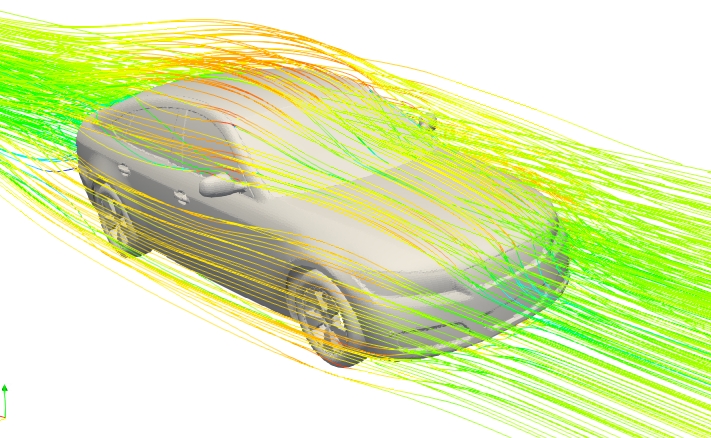
Necessity of External Flow Analysis for Vehicles
-
Aerodynamic Performance Improvement
-
Drag Reduction: Air resistance (drag) during vehicle motion accounts for a significant portion of fuel consumption. Flow analysis can help design the optimal vehicle shape to minimize drag, thereby improving fuel efficiency.
-
Lift/Downforce Control: At high speeds, it’s important to suppress lift (which causes the vehicle to become airborne) and generate downforce (which increases grip on the road). This is essential for improving driving stability, especially in sports cars or racing cars where downforce optimization is critical.
-
Crosswind Stability: Predicting and improving the vehicle's stability against crosswinds (winds from the side) ensures safer driving.
-
-
Noise Reduction
-
Wind Noise Reduction: Wind noise, generated by the flow of air around the vehicle at high speeds, is a major source of interior cabin noise. Flow analysis can suppress vortex formation and smooth airflow, thereby minimizing wind noise.
Cooling Performance Optimization
-
Engine Compartment Cooling: Analyzing how to direct external airflow to effectively cool heat-producing components inside the vehicle, such as the engine and brakes. It is used to predict and improve the performance of components like radiators and intercoolers.
-
Battery and Motor Cooling (Electric Vehicles): For electric vehicles, overheating of the battery and motor can lead to performance degradation and reduced lifespan. Flow analysis helps design effective cooling systems to prevent overheating.
-
-
Controlling Pollutant/Water Droplet Attachment
-
Windshield/Side Mirror Visibility: Reducing the attachment of rainwater, dust, and other debris to the windshield or side mirrors during driving helps maintain the driver’s visibility and increases safety.
-
Tailgate/Rear Camera Contamination Prevention: Contributing to the design to prevent dust and contaminants from accumulating behind the vehicle due to rear vortex.
-
-
Design and Aesthetic Considerations
-
When determining the exterior design of the vehicle, aerodynamic performance is considered simultaneously to balance both functionality and aesthetics.
-
Benefits of External Flow Simulation for Automotive Applications
-
Reduction in Development Time and Cost
-
By testing and optimizing various design alternatives through computer simulations before building physical prototypes or conducting wind tunnel experiments, potential issues can be identified and resolved in the early stages of development. This helps reduce unnecessary expenses and shortens the overall development timeline.
-
-
Accurate Performance Prediction and Design Improvement
-
External flow simulations enable precise prediction of aerodynamic performance—including drag, lift, noise, and cooling—prior to vehicle production. These insights allow engineers to refine the design to meet target performance requirements effectively.
-
-
Enhanced Safety and Comfort
-
Improved driving stability, better visibility, and reduced aerodynamic noise contribute to higher levels of safety and comfort for both drivers and passengers..
-
-
Improved Fuel Efficiency and Environmental Impact
-
Reducing aerodynamic drag directly enhances fuel efficiency, which lowers operating costs and decreases carbon emissions—supporting environmental sustainability initiatives.
-
-
Strengthened Technological Competitiveness
-
Leveraging advanced aerodynamic simulation technologies enables the development of more innovative and high-performance vehicles, thereby enhancing a company's technological edge and competitive position in the market.
-